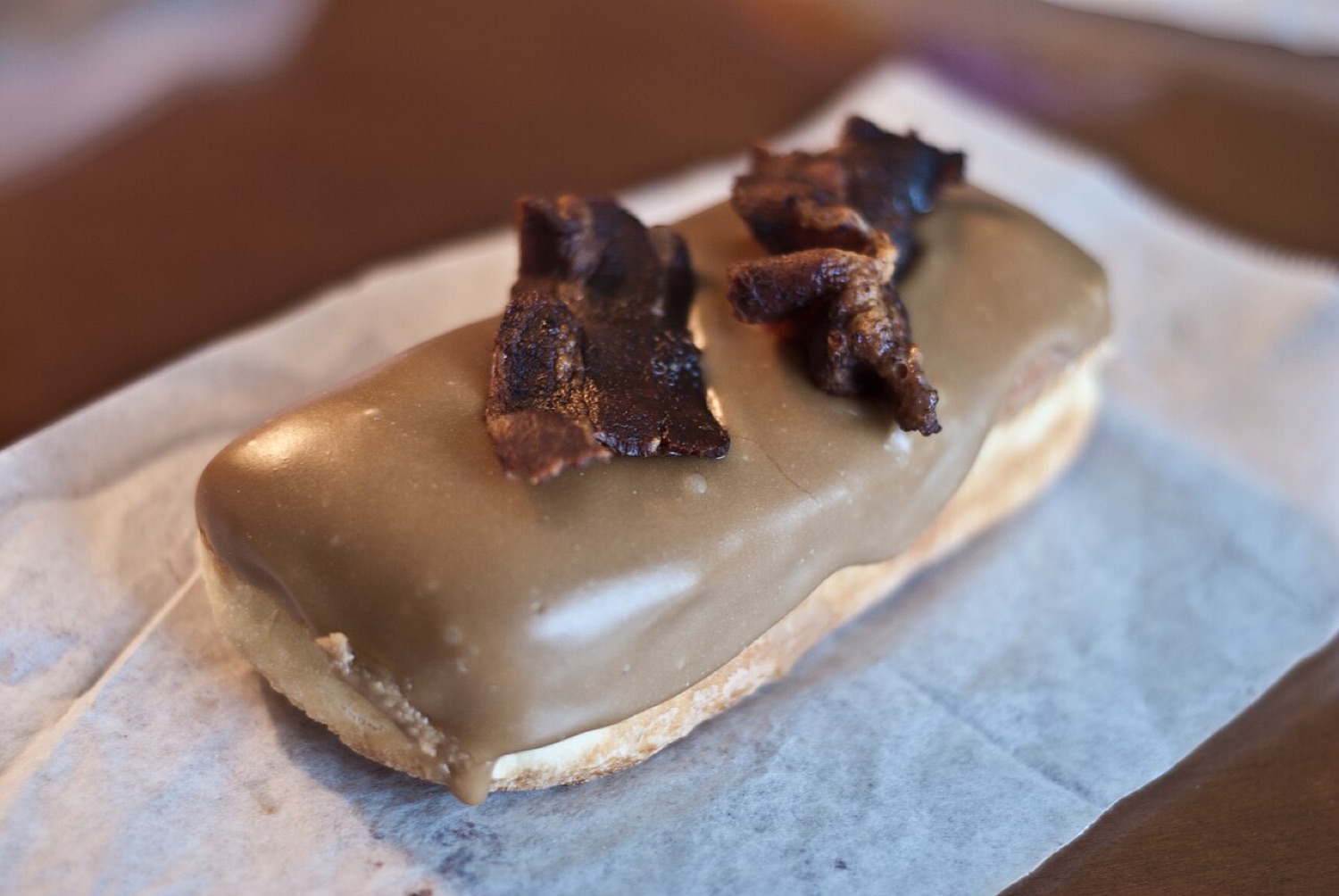
Many years ago, this blog posted a photo of a bacon maple doughnut from Portland, Oregon, and declared it proof that the universe is fundamentally good. We stand by that. The bacon maple bar went on to become one of the internet's first truly famous foods, and it set a pattern that still works.
The recipe for a viral food
- Two familiar things that should not go together. Bacon and doughnuts. Croissants and doughnuts. Sushi and burritos. The shock is the hook.
- It must photograph well. Bright colours, a cross-section, cheese pulling, steam: if it does not look good on a phone screen, it will not spread.
- A place you have to go. A single shop, a single city, a queue around the block. Scarcity turns a snack into a story.
- A name. The cronut, a croissant-doughnut hybrid introduced at a New York bakery in 2013, had lines before dawn partly because the name was so easy to say and share.
The life cycle
Viral foods follow the same arc as viral dances. First the original, then imitations in every city, then the chain-restaurant version, then the backlash. A few dishes, like the bacon maple bar, survive as permanent fixtures. Most become a slightly embarrassing photo on someone's old profile.
Where food meets spectacle
Nobody understood food as entertainment earlier than the big casino resorts. The all-you-can-eat Las Vegas buffet was originally a cheap way to keep visitors close to the gaming floor; over time the buffets became attractions in their own right, with towers of crab legs and dessert stations built to be photographed. Many resorts have since replaced them with food halls full of the latest viral snacks, which is a neat summary of how the internet changed eating out.
If you do queue for the next hybrid pastry, our only advice is the same as in the old post: take the picture, then eat it while it is warm.