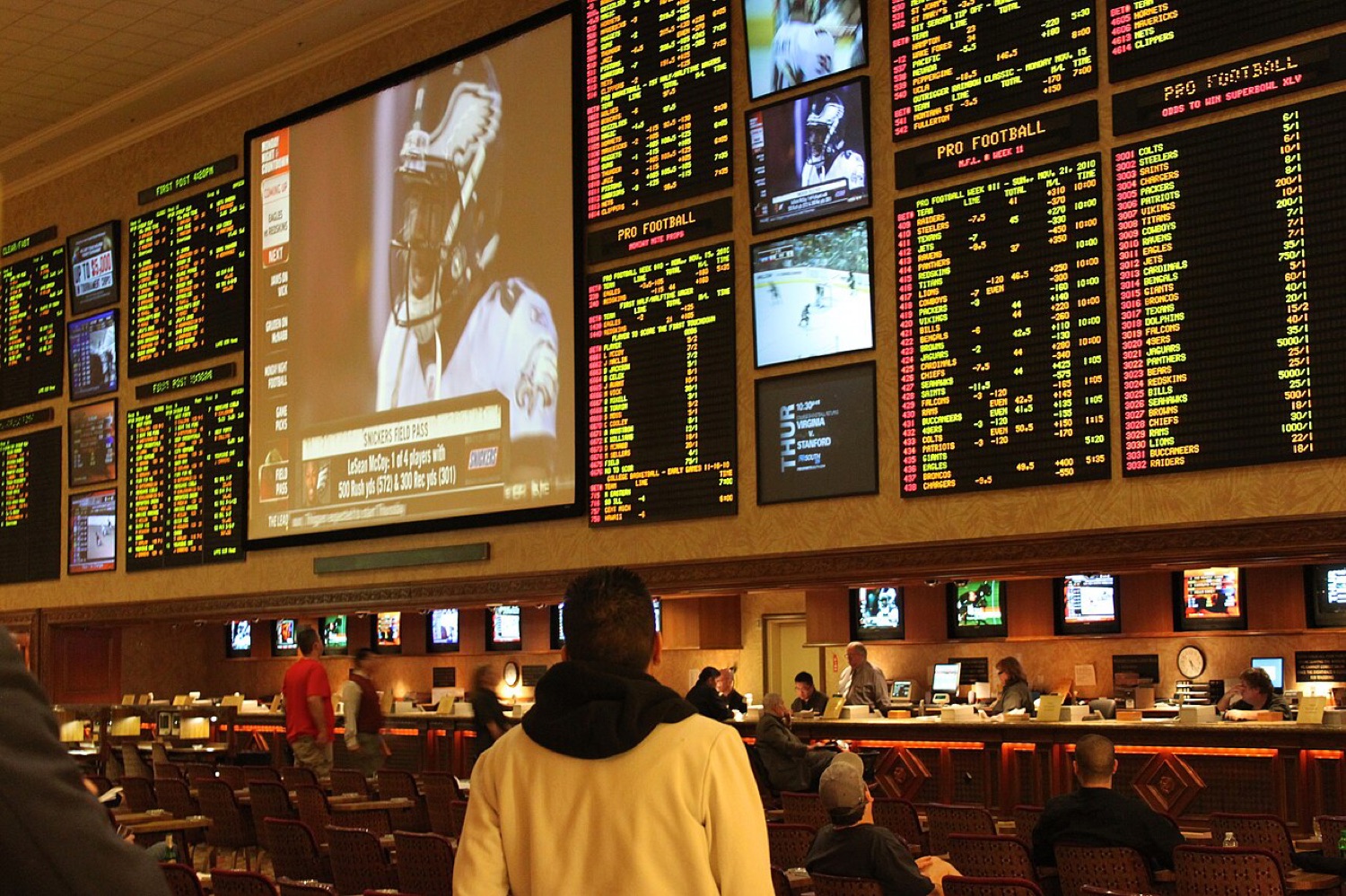
Walk into a sportsbook or open a betting app and the screen is a wall of numbers with plus and minus signs. It looks complicated, but nearly everything on it is one of three basic bets.
The point spread
The spread evens out a mismatch. If a strong team is listed at -6.5 against a weak team at +6.5, a bet on the favourite wins only if it wins by seven or more. A bet on the underdog wins if the underdog wins outright or loses by six or fewer. The half point exists to prevent ties, which are called a "push" and usually refund the stake.
The moneyline
The moneyline is simply who wins. American odds express the price around a $100 stake:
- Minus numbers are favourites: -150 means you stake $150 to win $100 profit.
- Plus numbers are underdogs: +150 means a $100 stake wins $150 profit.
Every price implies a probability. For a minus number, divide the odds by the odds plus 100: -150 implies 150 / 250, or 60 percent. For a plus number, divide 100 by the odds plus 100: +150 implies 100 / 250, or 40 percent.
Totals (over/under)
A total is a bet on the combined score. If the line is 44.5 points, "over" wins if the teams score 45 or more between them, "under" wins at 44 or fewer. Weather, injuries and pace of play move totals more than anything else.
The bookmaker's cut
Spreads and totals are usually priced at -110 on both sides. You stake $110 to win $100, so if the bookmaker takes equal money on each side, it keeps a small margin whatever happens. That margin is why a bettor needs to be right about 52.4 percent of the time at -110 just to break even.
| Bet | Question it answers | Example |
|---|---|---|
| Spread | By how much? | Favourite -6.5 |
| Moneyline | Who wins? | Underdog +150 |
| Total | How many points altogether? | Over 44.5 |
Lines also include factors like rest and travel. For why the home team usually gets a couple of points of credit, see Is Home-Field Advantage Real?